
More men suffer from testosterone deficiency than you might think.
According to studies, around 25 % of men over 30 have low testosterone levels. The deficiency is often not recognized or misdiagnosed as depression
Dr. med. Andreas Gutwein
Specialist in angiology and internal medicine
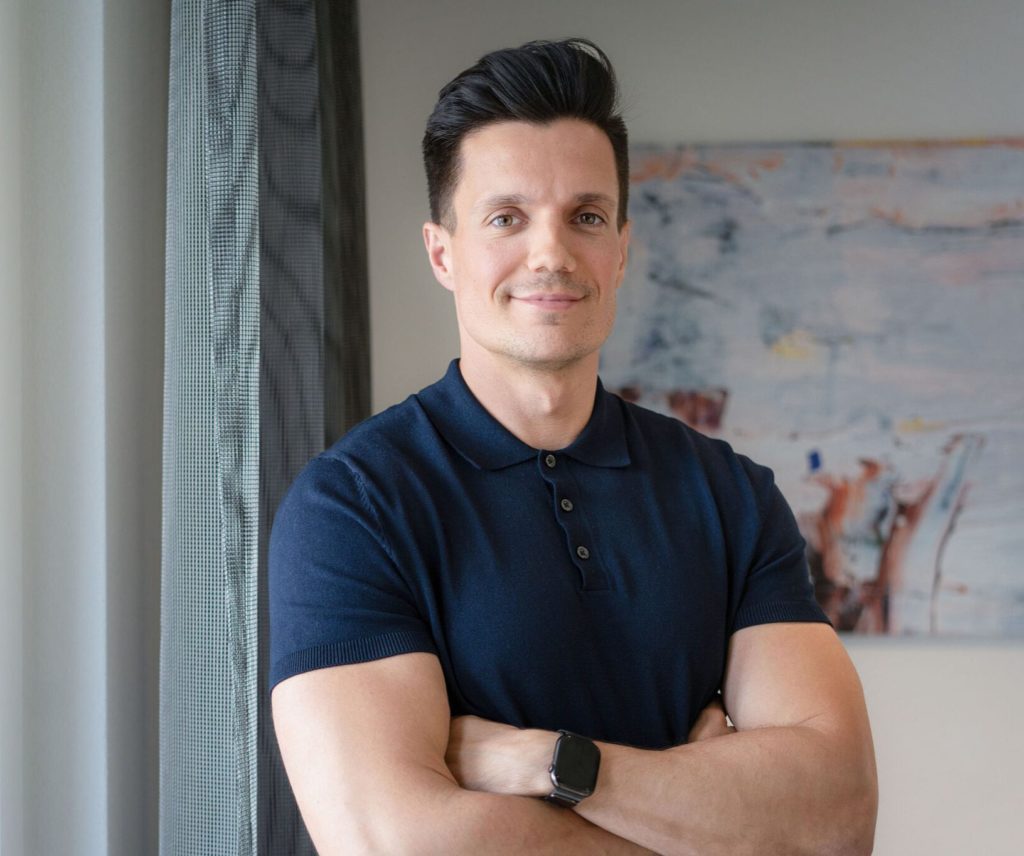
Dr.med.univ. Gabor Csiky-Strauss
General practitioner
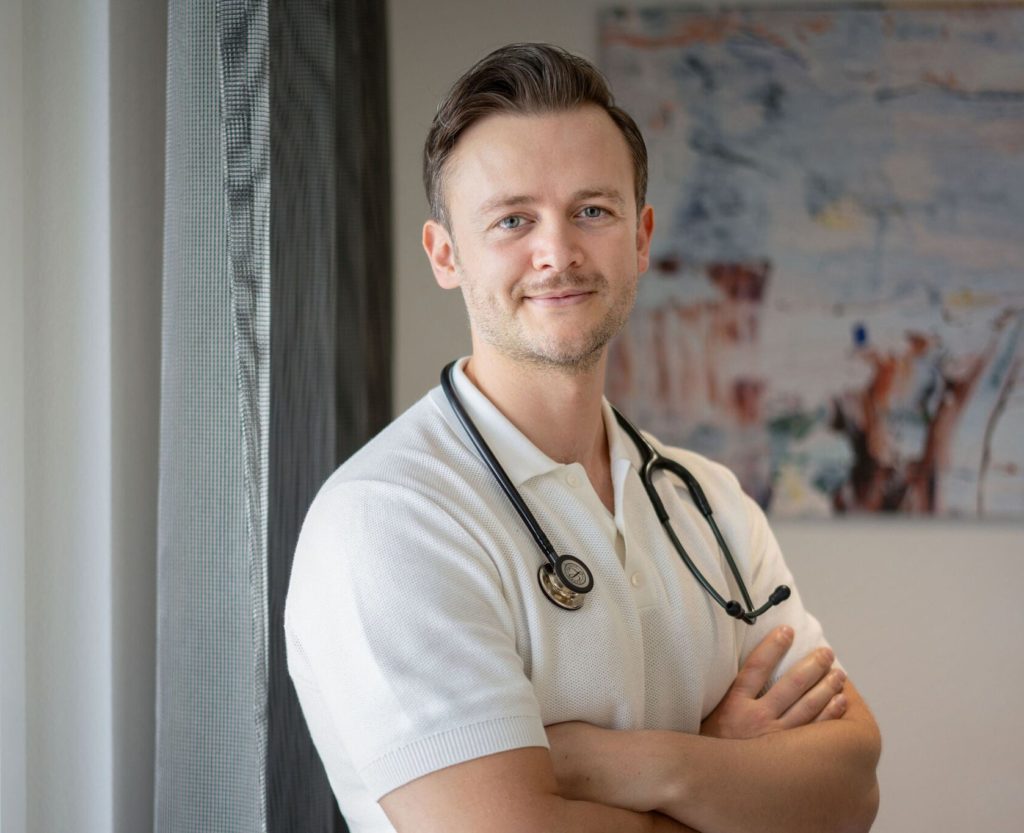
Dr.med.univ. Gabor Csiky-Strauss
General practitioner
According to studies, around 25 % of men over 30 have low testosterone levels. The deficiency is often not recognized or misdiagnosed as depression
The challenges of men's health, such as testosterone deficiency and erectile dysfunctionare often taboo in everyday clinical practice, both for patients and doctors. Symptomatic patients often go through a long period of suffering before the underlying problem is correctly recognized and treated. This often has serious consequences for those affected and their environment.
My aim is to address the taboo surrounding men's health issues. In addition to establishing and managing a men's health clinic at a central hospital, I am dedicated to advancing research in this field. Through our expertise and collaboration in this area, we hope to provide our patients with access to a wide network of specialists and offer symptomatic patients prompt and targeted therapy.
I practice medicine as a GP in Lenzburg (AG) and Obergösgen (SO). I have always been interested in hormone replacement therapy for men.
Unfortunately, this important discipline has not been part of the curriculum either at university or during specialist training. Doctors have mainly been trained to treat diseases. The prevention of diseases and, above all, the optimization of quality of life, on the other hand, have clearly been pushed into the background.
In my two medical practices, I have successfully treated over 500 men with testosterone replacement therapy to date. Many of these men would otherwise not have received appropriate therapy due to their multiple symptoms, or even worse, a wrong therapy might have been initiated(e.g. prescription of antidepressants)
The challenges of men's health, such as testosterone deficiency and erectile dysfunctionare often taboo in everyday clinical practice, both for patients and doctors. Symptomatic patients often go through a long period of suffering before the underlying problem is correctly recognized and treated. This often has serious consequences for those affected and their environment.
My aim is to address the taboo surrounding men's health issues. In addition to establishing and managing a men's health clinic at a central hospital, I am dedicated to advancing research in this field. Through our expertise and collaboration in this area, we hope to provide our patients with access to a wide network of specialists and offer symptomatic patients prompt and targeted therapy.
I practice as a family doctor in Lenzburg (AG) and Obergösgen. (SO). I have always been interested in hormone replacement therapy for men.
Unfortunately, this important discipline has not been part of the curriculum either at university or during specialist training. Doctors have mainly been trained to treat diseases. The prevention of diseases and, above all, the optimization of quality of life, on the other hand, have clearly been pushed into the background.
In my two medical practices, I have successfully treated over 500 men with testosterone replacement therapy to date. Many of these men would otherwise not have received appropriate therapy due to their multiple symptoms, or even worse, a wrong therapy might have been initiated(e.g. prescription of antidepressants)
All consultations take place online via Zoom.
Sensitive data is processed via encrypted (HIN) email.
You can book the initial consultation online on this website for a fee.
1. Preparation phase
Immediately after booking, you will receive a questionnaire and a list of the required blood tests by e-mail. This information is mandatory before the initial consultation begins.
2. Initial consultation
We will discuss your medical history, symptoms and laboratory findings and decide whether you could be a suitable candidate for TRT.
3. Verification of the testosterone deficiency
One measurement alone is not a reliable measurement. For this reason, a second analysis might be arranged after the first blood sample to confirm the deficiency.
4. Discussion of TRT
As soon as the testosterone deficiency is confirmed, we discuss the treatment options and dosage - naturally with thorough information.
5. Initiating TRT
The first prescription will be sent via encrypted Email to your pharmacy. You will also receive a tutorial video showing you how to administer the injections confidently by yourself.
6. First follow-up after start TRT
4 weeks after the start of TRT, a blood sample is taken and then a follow-up check is carried out. We discuss the progress to date, your impressions and check the testosterone level under TRT. If necessary, adjustments will be made to the therapy.
7. Follow-ups
The therapy is initially monitored every 3 months, then every 6 months if the values are stable
Immediately after booking, you will receive a questionnaire and a list of the required blood tests by e-mail. These documents are required before the first consultation.
We will discuss your medical history, symptoms and laboratory findings and decide whether you could be a suitable candidate for TRT.
One measurement alone is not a reliable measurement. For this reason, a second analysis might be arranged after the first blood sample to confirm the deficiency.
In case of a verified testosterone deficiency we will discuss the treatment options and dosage, and will provide you with detailed information.
The first prescription will be sent via encrypted Email to your pharmacy. You will also receive a tutorial video showing you how to administer the injections confidently by yourself.
4 weeks after the start of TRT, a blood sample is taken and then a follow-up check is carried out. We discuss the progress to date, your impressions and check the testosterone level under TRT. If necessary, adjustments will be made to the therapy.
The therapy is initially monitored and optimized every 3 months, then every 6 months if the values are stable, and long-term prescriptions are issued
If a testosterone deficiency is confirmed by double verification and the clinical symptoms are consistent with the laboratory findings, testosterone replacement therapy - with target values just below the upper normal range - can make a decisive difference for many men. Don't wait any longer
There is no clear cut-off value at which TRT is recommended; each patient and their medical history are assessed individually and the indication evaluated. In principle, the testosterone level does not have to be significantly lowered in the laboratory; a low-normal value is sufficient.
There is no minimum age, each case is considered individually. Unfortunately, nowadays we tend to see extremely low levels among young men, which clearly require testosterone replacement therapy. If you have the typical symptoms, it is better to get tested.
The prescribed testosterone preparation (Testoviron) costs around CHF 30-50 per month, depending on the dosage. Disposable materials (syringes, needles, skin disinfectant, etc.) are also included. The health insurance companies do not cover these costs, they are self-pay services.
The costs for a stable setting are as follows:
-Initial consultation: CHF 200
-Setup package: CHF 500
Follow-up checks in the first year: 2-3 checks every 3 months, CHF 100 per check (CHF 200-300 in total)
Total costs in the first year: approx. CHF 900- 1000
From the second year:
-Follow-up checks: every 6 months, CHF 100 per check
Total annual costs: approx. CHF 200-300.
Important note: Medical costs are not covered by basic or supplementary insurance.
The standard consultation time is 15 minutes.
You must pay the consultation costs and the testosterone injections yourself; these are not covered by health insurance. The blood samples can be taken by your family doctor, the costs are usually covered by your health insurance. The walk-in laboratories are not covered by health insurance. Alternatively, you can also have the blood samples taken in our practices, please see FAQ point 4.
We only prescribe testosterone as injections, as orally taken testosterone is not approved in Switzerland and gels can cause fluctuations in hormone levels. Injections allow for constant, precise and simple dosing.
Blood samples can primarily be taken at your family doctor's office, the costs are usually covered by basic insurance. Alternatively, you can visit walk-in laboratories close to your home, but the costs will not be covered without a doctor's prescription. Please note that we do not issue referrals /prescreptions to third-party providers for blood samples.
Alternatively, blood samples can also be taken at our GP medical offices. We have two locations in Lenzburg and Olten. The costs are generally covered by the health insurance companies, depending on the insurance model.
Consultations take place exclusively via Zoom.
The prescriptions (Testoviron requires a prescription) are sent directly to your pharmacy by encrypted e-mail.
The self-injections are administered superficially subcutaneously (below the skin level, directly into the fatty tissue). The insulin needles are practically imperceptible.
To achieve optimal results, testosterone should be injected at least twice a week. We recommend the standard schedule of every other day.
Of course, we will provide you with a video tutorial.
Testosterone therapy can affect fertility. During therapy, the body's own testosterone production is reduced, which can lead to reduced sperm production. In some cases, this can be temporary or permanent.
If there is a desire to have children, it is important to contact a fertility clinic before starting testosterone therapy in order to consider individual counseling and possible measures to preserve fertility, such as freezing sperm.
We do not offer hCG therapy routinely. Upon explicit request, hCG can be considered in selected cases, for example in the presence of pronounced testicular atrophy while on TRT.
It is perfectly possible to discontinue therapy at any time, but there are a few things to bear in mind.
Yes, the most important are: 1. prostate cancer 2. a known elevation of red blood cells (the latter can be remedied by blood donation/bloodletting)
With conventional dosing, side effects are rare. It is important to emphasize that we are treating a deficiency or low testosterone level here, in contrast to anabolic abuse, where ten times the TRT dose is often administered together with various other preparations.
Yes, so far there has not been a single incident where patients have had problems. A medical certificate can be issued in English on request.
Even if the consultations are purely a self-pay service, we can only treat patients with valid Swiss health insurance.
Yes, this is possible without further ado. Please book an initial consultation.
Based on our experience, Testoviron has proven to be more beneficial in many respects than Nebido or Testogel. Therefore, in our practice we primarily recommend Testoviron for testosterone replacement therapy.
The list of analyses that we usually require (not older than 3 months):
Small blood count, CRP, ferritin, TSH, total testosterone, free testosterone (calculated) SHBG, albumin, FSH, LH, estradiol, prolactin, liver values (GOT; GPT; GGT ALP), creatinine
The consultation costs are not covered by Swiss health insurance.
If the values are stable, follow-ups are are sufficient every 6 months
Discussion of the medical history, laboratory findings, indication, further tips.
All consultations in the first month, as well as two prescription issuances.
Discussion of laboratory values, possible therapy adjustments and issuing prescriptions.
You can confirm your booking with a deposit of CHF 50 (non-refundable).
A QR invoice for the remaining amount (CHF 150) will be sent to you by email after the initial consultation.
The consultation costs are not covered by Swiss health insurance.
We can only treat patients with valid Swiss health insurance.
If you have any further questions, please do not hesitate to contact us. Medical questions can only be answered during a consultation

Your specialist for TRT throughout Switzerland
 German German
  English German German English